
Welcome to my Blog
Understanding IBS & the Gut–Brain Connection
Clear, practical articles to help you understand IBS and other disorders of gut–brain interaction, the gut–brain connection, gut-directed hypnotherapy, anxiety and stress.
Search IBS articles:
BROWSE BY TOPIC
START HERE
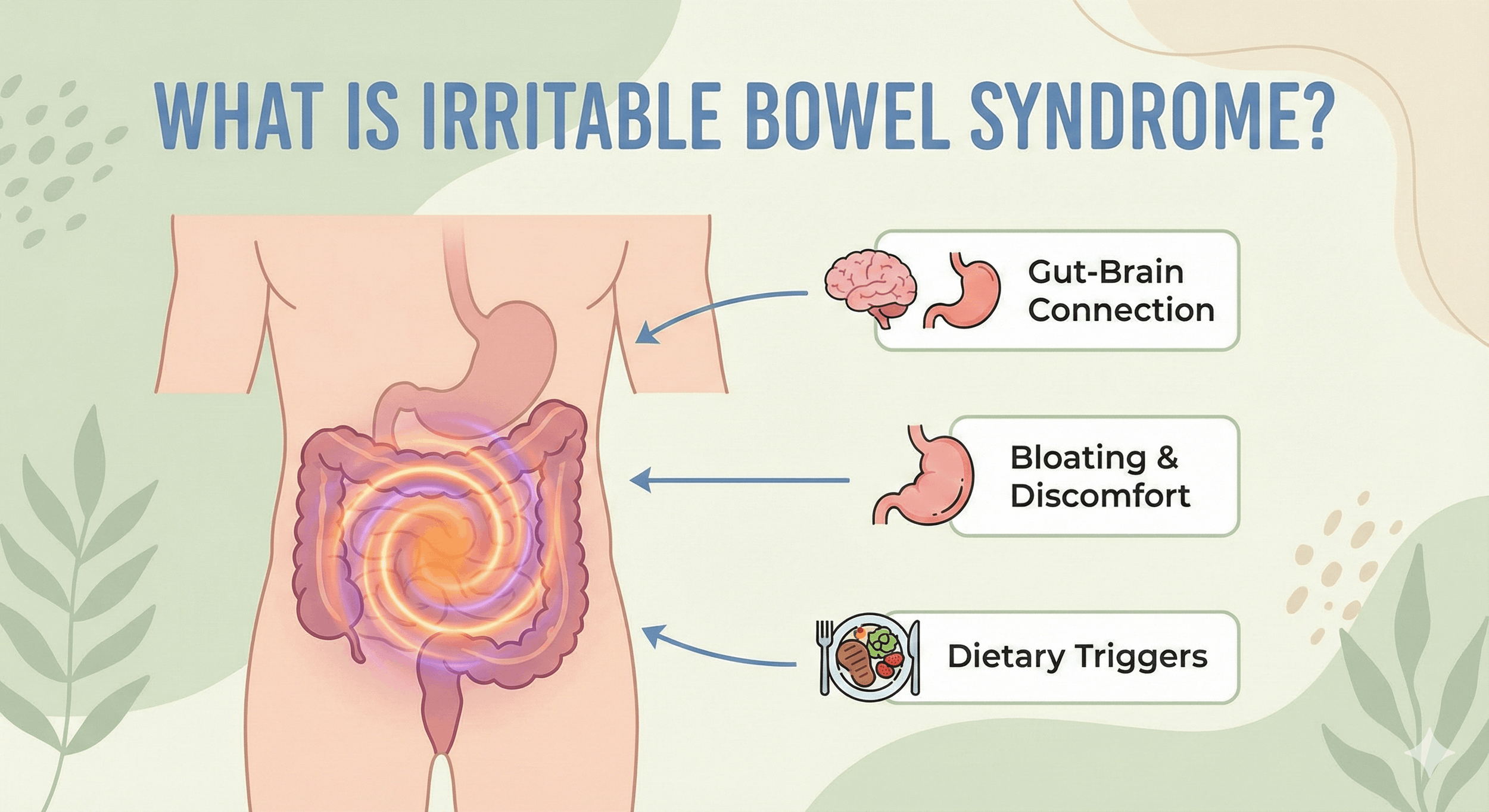
What Is irritable bowel syndrome?
Gut-directed hypnotherapy
- an effective IBS treatement
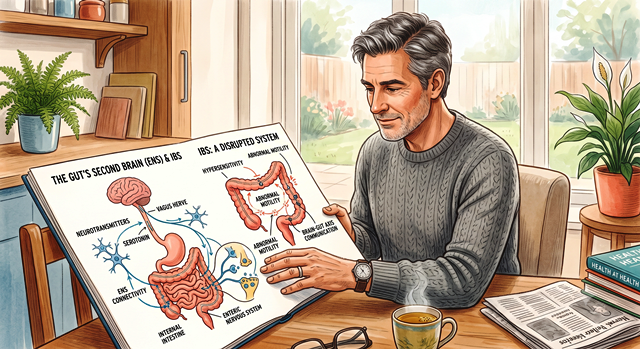
Your Gut Has Its Own Nervous System
FREE IBS ROADMAP
RECENT POSTS
IBS and Anxiety: What You Do Next Can Reduce — or Reinforce — the Cycle
What you do after anxiety is triggered can either help you deal with the risk — or unintentionally keep the IBS–anxiety cycle going.
That’s the focus of Part 3 of my series on IBS and anxiety.
In Parts 1 and 2, I looked at how IBS symptoms can trigger thoughts about their consequences, and how engaging with those thoughts can develop into worrying and intensify anxiety.
This final article in the 3-part series asks a practical question:
What do you do next?
I explore four common responses:
Risk mitigation. Avoidance. Escape. Safety behaviours.
Is It Just Stress?
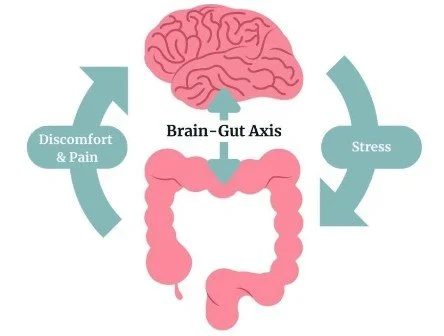
IBS is not “just stress”, but stress and anxiety can influence how gut symptoms are experienced. This article explores the gut–brain connection, why symptoms can become harder to ignore, and where gut-directed hypnotherapy may fit within a broader IBS treatment approach.
Why Your Gut Reacts to Things That Haven't Happened Yet (Part 1 of 3)
Have you ever felt your gut tighten the night before a meeting, before anything's actually gone wrong? Most people call that "anxiety" and leave it there — but that word is doing far too much work and hiding at least four different things. In Part 1 of a new 3-part series, I unpack what anxiety actually is, how it differs from acute stress, and why IBS symptoms and anxiety can end up locked in a self-reinforcing loop. If you've ever googled "anxiety" after a hard day and come away more confused than when you started, this one's for you.
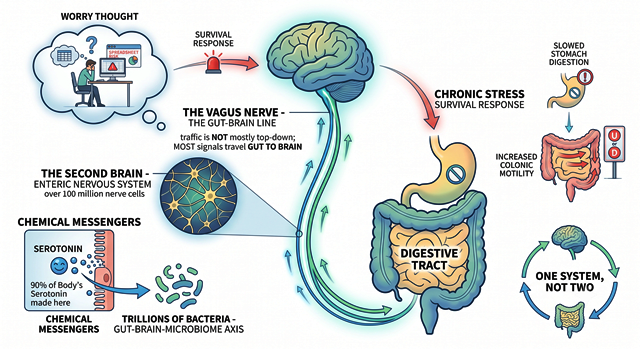
Your Gut Didn't Get the Memo
Why does your gut react before your thinking brain has caught up? In this post, I unpack the biology behind anxiety-driven IBS symptoms — from the vagus nerve's gut-to-brain "reporting line," to why a stray worry thought can end in an urgent trip to the bathroom. I also look at why treating the gut and the mind as separate problems is often where IBS management goes wrong.
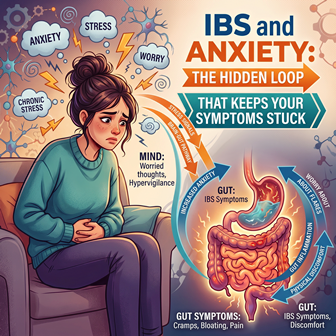
IBS and anxiety: the hidden loop that keeps your symptoms stuck
The cramping starts even when you’ve eaten nothing unusual, and suddenly every bathroom between home and work feels essential.
IBS and anxiety often form a gut‑brain loop where worry triggers symptoms—and symptoms trigger more anxiety and IBS.
This cycle is learned, not permanent, and can be retrained.
In this five‑minute read, you’ll learn one practical step to start interrupting IBS‑anxiety flare‑ups.

Why does work anxiety always lead to bathroom panic — and how do I break it?
If work anxiety triggers IBS urgency, cramping, or bathroom panic, your nervous system may be predicting threat. Learn how the gut–brain axis, worry, safety behaviours, coaching, and gut-directed hypnotherapy can help retrain the response.
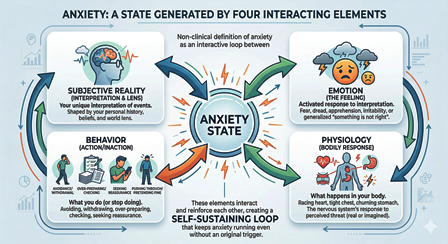
What Is Anxiety Really? And Why Does It Matter When You Have IBS?
Most people feel anxious from time to time.
· Before a job interview.
· While waiting for test results.
· When something important is uncertain.
That kind of anxiety is normal. It is your survival system doing its job, flagging a possible risk and nudging you to pay attention.
But when you live with IBS, anxiety can become much more specific.