IBS?
What is Irritable Bowel Syndrome?
A supportive, evidence-informed overview
If you’ve been diagnosed with Irritable Bowel Syndrome (IBS), you may be seeking more information on how to manage its daily impact. While stress management and dietary adjustments are common starting points, understanding the "why" behind your symptoms is a vital part of your management journey.
Understanding the Gut–Brain Connection
IBS is a common functional gastrointestinal challenge, affecting an estimated 10–15% of people worldwide. It involves a complex interaction between your brain, gut, and nervous system.
A distinctive feature of IBS is that it is a functional condition. This means that while the structure of the gut appears normal in standard medical tests, the way it functions is currently altered or hypersensitive.
IBS and Gut–Brain Interaction
IBS is widely understood through the lens of the gut–brain axis. In this model, the communication between your central nervous system and your enteric nervous system (the "brain in your gut") is experiencing challenges.
This can lead to changes in:
Gut motility: The pace at which food moves through the digestive system.
Visceral sensitivity: A heightened awareness of internal sensations like gas or pressure.
Nervous system response: A state of increased sensitivity to internal and external factors.
The Symptom–Stress Cycle
For many, IBS symptoms are influenced by the body’s response to stressors. When the nervous system is in a state of heightened sensitivity, it can impact how the digestive system functions.
This can create a cycle where physical discomfort triggers a stress response, which in turn can influence how symptoms are experienced. Gut-Directed Hypnotherapy focuses on addressing this cycle to support long-term symptom management.
Does this sound familiar?
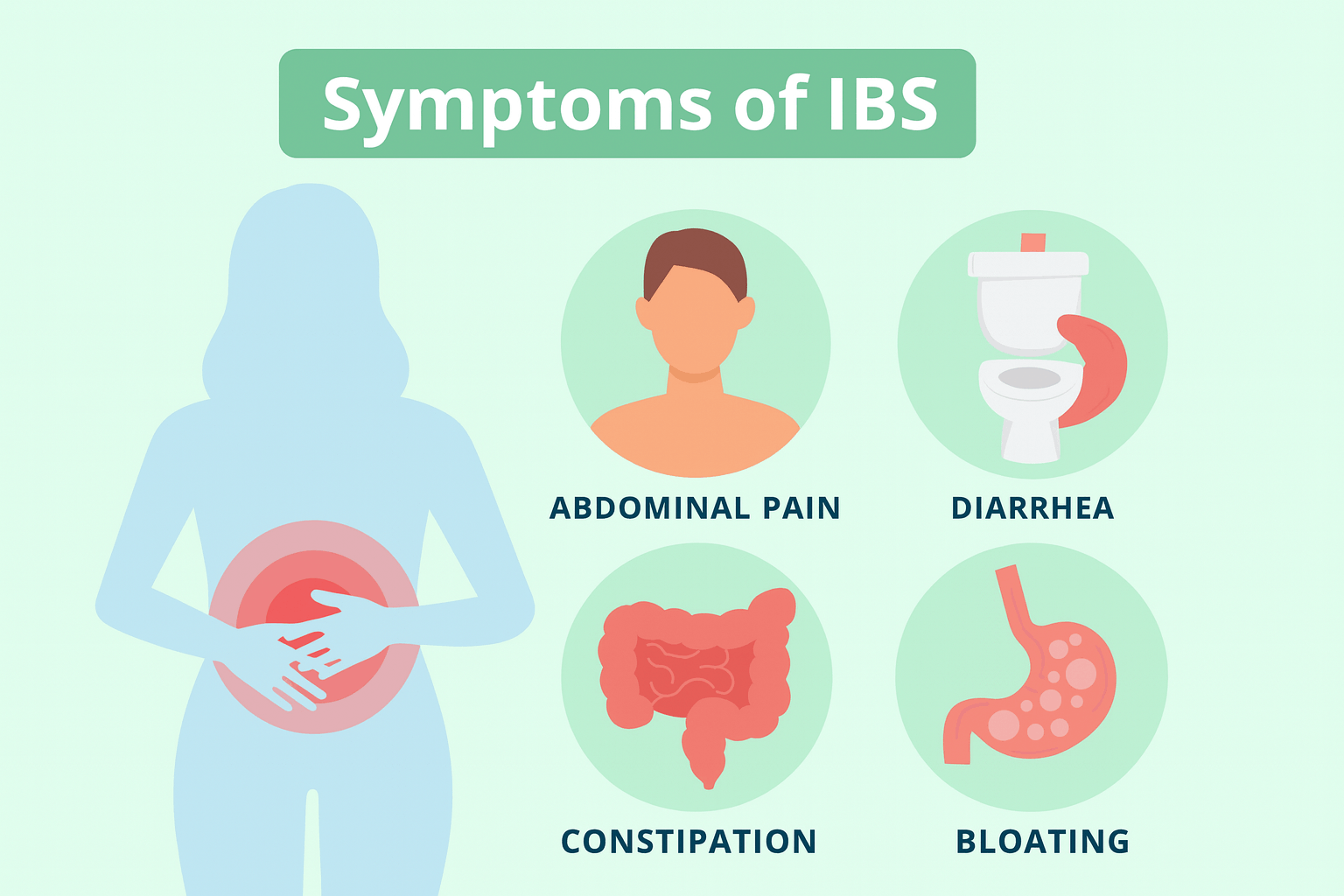
Common IBS Symptoms
IBS can look different for everyone, but the most common symptoms include:
Abdominal pain or cramping
Bloating or swelling in the abdomen
Diarrhoea (IBS-D)
Constipation (IBS-C)
Alternating bowel patterns (IBS-M)
Urgency or incomplete emptying
Excess gas or mucus in stools
Fatigue and disrupted sleep
These symptoms often fluctuate, and can be triggered by:
Hormonal shifts (especially in women)

Stress and anxiety

Food (especially high FODMAPs, gluten, or dairy)
Illness or gut infections
Dysbiosis (gut microbiome imbalance)
Understanding the Nature of IBS
To support the management of IBS, it is helpful to understand what it is not. Based on current clinical understanding:
It is distinct from inflammatory conditions: Unlike IBD (Inflammatory Bowel Disease), IBS is a functional concern rather than one driven by visible inflammation or structural damage.
It is not caused by a blockage: Standard scans usually show a healthy structure, as the challenge lies in how the system functions.
It is not “just anxiety”: While stress influences the gut, IBS involves real, physical communication challenges between the brain and the digestive system.
And it is not your fault.
IBS is recognised as a biopsychosocial condition. This means it is influenced by a complex interaction between your biology, your environment, and your nervous system.
Because it is multi-faceted, it is often approached through a supportive framework that addresses the gut-brain connection, helping you work with your body's unique responses.
Approaches to Comprehensive Support
While dietary changes, medications, and supplements are valuable tools for many, an integrated approach can provide additional mind-body support. This is because research increasingly highlights the key role of the gut–brain axis in managing symptoms alongside traditional digestive care.
Evidence-informed approaches that focus on this connection include:
Gut-Directed Hypnotherapy (GDH): A specialised protocol designed to support the regulation of the gut-brain connection.
Cognitive Behavioural Hypnotherapy: Focuses on addressing the psychological impact and stress-cycle of chronic symptoms.
Nervous System Regulation: Techniques designed to support a resilient stress response.
Stress Management: Tools to help influence the physiological impact of stress on digestion.
Personalised Lifestyle Strategies: Tailored adjustments to support your overall digestive wellbeing.
The bottom line?
IBS is a recognised, multi-faceted condition that is known to respond well to evidence-informed support. You do not have to navigate this journey alone or rely on fragmented information. By focusing on the gut–brain axis, you can address the challenges of chronic symptoms and start a structured path toward supporting your daily wellbeing and symptom management.
There is a path forward— one that starts by understanding how your body communicates.